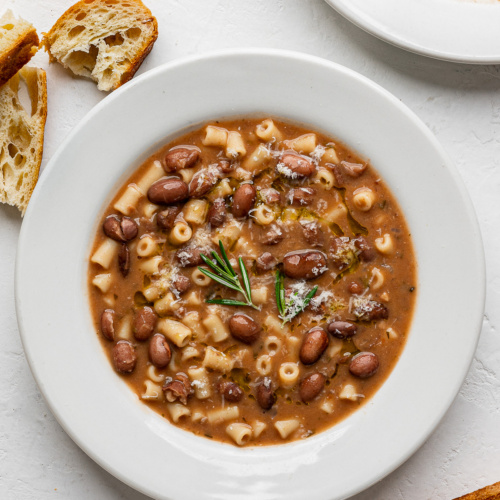
Pasta e Fagioli
sandravalvassori.com
A staple of Italian cuisine, Pasta e fagioli is warm, hearty, and packed with rich flavors. This classic Italian soup combines tender pasta, creamy beans, fresh herbs, and a savory broth for a dish that’s both filling and nutritious. Perfect comfort food for cozy nights in. Note: The total cooking time provided for this recipe, is based on using canned beans. If using dried beans, add at least 1 hour to the total cooking time.
Servings: 6
Ingredients
- 2 1/4 cups borlotti, Romano or cannellini beans, soaked 8-12 hours, or use 3 (14-ounce) cans drained but not rinsed
- 2 tablespoons extra virgin olive oil
- 2 ounces pancetta, finely chopped
- 1 medium yellow onion, very finely diced
- Kosher salt and freshly ground black pepper
- 3 garlic cloves, lightly smashed
- 2 tablespoons chopped fresh rosemary
- 2 tablespoons chopped fresh parsley (leaves and thin stem)
- 1/4 teaspoon red pepper flakes (optional)
- 1/3 cup passata (strained tomatoes) or 2 tablespoons tomato paste
- 6 cups liquid: use all chicken or vegetable broth or 4 cups broth with 2 cups bean cooking liquid
- 1 1/2 cups small pasta, such as tubetti, ditalini, elbows or shells
- ⅓ cup freshly grated Parmigiano-Reggiano, for serving
Instructions
- If using dried, soaked beans, drain the beans and rinse them well. Place the beans in a large, heavy-bottomed pot and cover with double the volume of cold water. If you'd like, but it's not essential, add 1 celery stalk, 1 halved carrot, and 1 bay leaf. Bring to a boil over medium-high heat. Reduce to a simmer and cook for about 50 to 75 minutes, or until the beans are tender but still holding their shape. The total time will vary depending on the variety and age of the beans. Remove and discard the chopped vegetables and bay leaf and let the beans sit in the cooking liquid until you are ready to use them.
- Heat oil over medium heat in a large, heavy pot or Dutch oven and add the pancetta. Cook for 3-4 minutes or until the pancetta has rendered most of its fat. Note: If omitting the pancetta use 1/4 cup olive oil.
- Add the onions and a pinch of salt and saute until the onion is soft, 3-4 minutes. Stir in the garlic cloves, chopped rosemary parsley and red pepper flakes (if using). Cook for 1-2 minutes more or until garlic is fragrant and just turning golden. Stir in the passata and cook until it darkens slightly, about 1 minute.
- Add the beans, stir, then add the liquid: you need 6 cups total from either just broth, or broth with some of the bean cooking liquid (if you cooked beans from scratch). Bring to a boil, then reduce the heat to medium-low and simmer, uncovered, for 10 minutes.
- Using a ladle or large spoon, scoop approximately 1 cup of the beans along with a bit of their liquid into a blender. Remove the center cap from the blender lid to allow steam to escape, and cover the opening with a kitchen towel to prevent splatters. Blend until smooth, then set aside. Note: You can also use an immersion blender and blend some of the beans right in the pot. Just don't blend too aggressively, you don't want to blend too many of the beans— just a few pulses will do.
- Turn heat to medium-high. Once liquid is gently boiling, add the pasta along with 1 teaspoon salt and a few grinds of black pepper. Stirring often, cook until pasta is al dente—tender but still slightly firm to the bite. TIP: Because you're cooking the pasta in a fairly thick broth, it tends to stick to the bottom of the pot so be sure to stir frequently. If the pasta seems to be absorbing too much of the liquid, add more broth or water as needed.
- Stir in the reserved puréed beans. TIP: If you're having a hard time getting the mixture out of the blender, add some of the hot soup broth to the blender to help loosen it. Cook for a few more minutes, until the soup is heated through.
- Taste and season with a little more salt and pepper, until it tastes good to you. Note: Depending on the beans you used, you may need to add quite a bit more salt. Ladle the soup into bowls, and serve with grated parmesan cheese and a drizzle of your best extra virgin olive oil. Enjoy!
Notes
- Authentic pasta e fagioli isn’t too thick or too thin—it’s just right! If it becomes too thick, simply add some hot broth or water to loosen it up.
- There is no doubt that pasta e fagioli tastes better when you cook the pasta directly in the soup and this is how I always do it. But if you anticipate leftovers, cooking the pasta separately helps avoid over-softening. Add the pasta just before serving if you’re looking to keep it al dente.
- A note on salt – I only use Diamond Crystal Kosher salt for all my cooking and baking. Other brands, or table salt, might be saltier so err on the side of caution and use a little less.