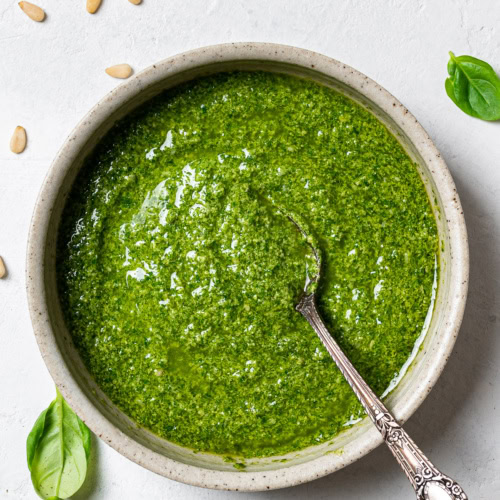
Pesto Alla Genovese (Basil Pesto)
sandravalvassori.com
This classic, luxuriously creamy Pesto Alla Genovese (Basil pesto) is made from a bounty of fresh basil, pine nuts, garlic, olive oil and cheese. Vibrant in colour and flavour, it will be the brightest-tasting pesto you've ever made or eaten.
Servings: 1 1/8 cup
Ingredients
- 2 ounces small-ish basil leaves about 5 cups loosely packed
- 1/4 cup pine nuts
- 1 small garlic clove, smashed and roughly chopped
- 1/2 cup mild extra-virgin olive oil, divided (chill in fridge for 20 minutes - see notes))
- 1/2 teaspoon kosher or flakey sea salt
- 1/3 cup very finely grated Parmigiano-Reggiano cheese
- 3 Tablespoons very finely grated aged Pecorino Toscano or Pecorino Romano cheese
Instructions
Please read through the tips in Recipe Notes below before you start!
- Place blades and/or bowl of blender in freezer to chill for 20-30 minutes.
- Fill a bowl with cold water and place all the basil leaves in it. Gently lift and submerge the leaves a few times to wash them. Holding the basil leaves back with one hand, tip the bowl to pour out the water. Refill with water doing your best not to let the water hit the leaves too harshly. Soak the cleaned leaves for 5-10 minutes. Gently lift them out of the water and place them on a clean tea towel (or two). They don't need to be dry but you don't want them dripping with too much water, either.
- Remove chilled blades and bowl from freezer. Working quickly, add the pine nuts, garlic, salt, and half of the chilled olive to the bowl. Purée until mixture is as smooth as you can get it. Add about 1/4 of the basil leaves and use just 3 or 4 short pulses to break them down. Repeat with 3 more additions, pulsing in short intervals just until all the basil leaves are broken down. Slowly drizzle in the rest of the olive oil and the cheese and ontinue pulsing until you have a creamy, slightly loose pesto. Do not overblend.
- Using a rubber spatula, scrape every last bit of pesto into a bowl or jar. If not using immediately, drizzle a little olive oil to cover the entire surface of the pesto. This will prevent it from oxidizing. Cover the jar or bowl tightly and refrigerate until ready to use. The pesto will be good for up to 5 days.
Notes
-
- Start with the best basil leaves. Smaller basil leaves from a basil Genovese plant will give you the best pesto. Leaves that are bigger than 3-inches, tend to be more bitter and not as vibrant.
-
- Chill the blades and bowl of the blender or food processor. The blades of a blender or food processor can heat up pretty quickly. Chilling the blades and the bowl will mimic the cold marble mortar which helps prevent the basil leaves from oxidizing when they are mashed or blended. Place the blades and bowl in the freezer for 20-30 minutes. If the bowl doesn't fit in your freezer, you can put it in the refrigerator for 30-40 minutes.
-
- Wash and soak the basil leaves in cold water. Soaking the leaves both softens and washes them and also helps remove any bitterness. If your basil is squeaky clean, you can skip the washing steps but still soak them for 5 minutes, if time permits.
-
- Chill the olive oil. Place the olive oil in the fridge or freezer for 10-15 minutes to get it really cold. This is extra insurance to keep the pesto vibrant green.
-
- Finely grate the cheese. Use a microplane or the smallest holes of a box grater to grate the cheese(s). The lighter and fluffier the better because the last thing you want is heavy grated cheese weighing down your pesto.
-
- Add the ingredients in steps: This is not a dump and blitz process. When pesto is made with a mortar and pestle, the ingredients are pounded in a very particular order to achieve the perfect texture. Here, we are foregoing the mortar and pestle but still following the tradition of adding the ingredients in steps so that the pesto is just as spectacular.
- Don't remove the basil leaves from the plant too far in advance. Once you pick the leaves off the plant, make the pesto quickly so they are as fresh as possible when you make the pesto.
- Cheese: Pecorino Fiore Sardo, a sheep's milk cheese, is the traditional cheese used for a classic basil pesto. It has a salty, smoky flavour yet it isn't as salty as Pecorino Romano. Unfortunately, this cheese is hard to find so even Italians will often use a mix of 75% Parmesan and 25% Pecorino Toscano, or Pecorino Romano.