

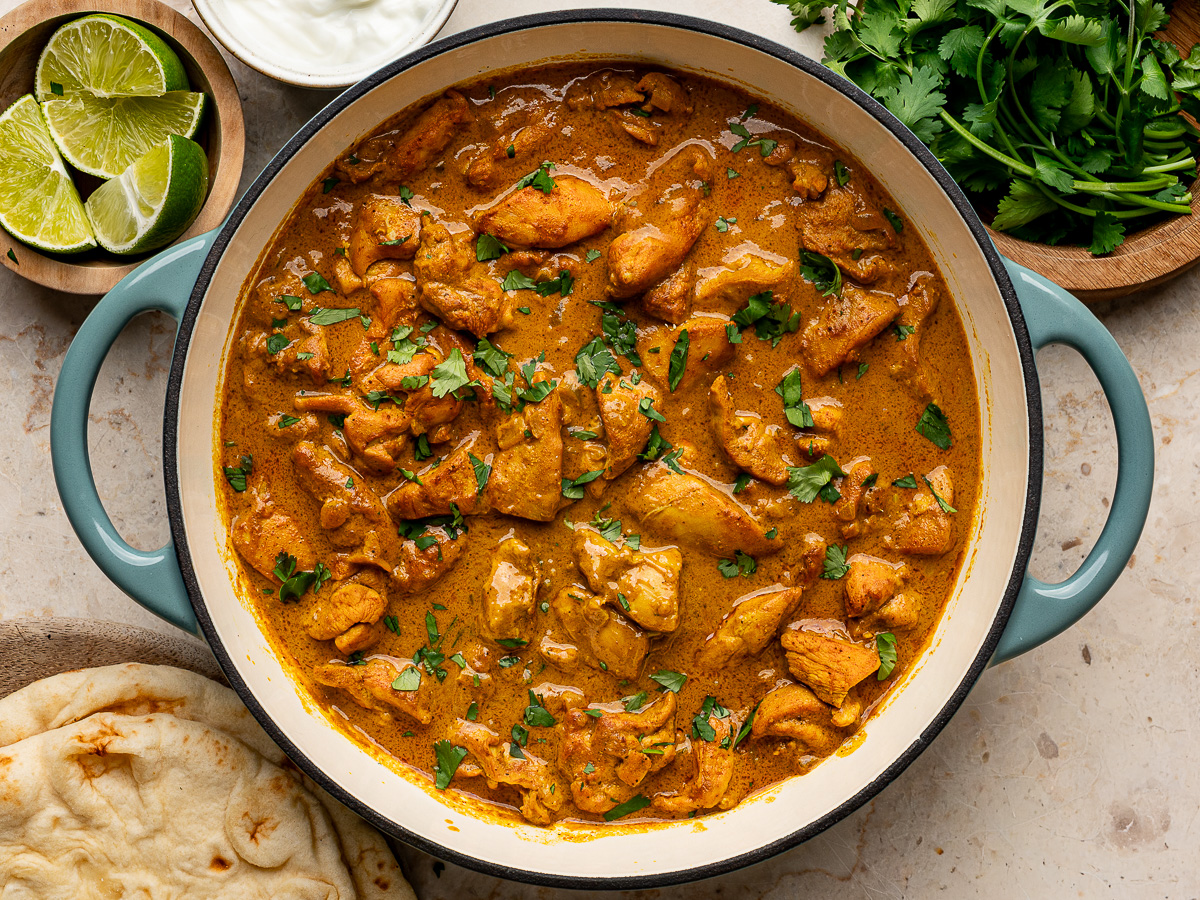
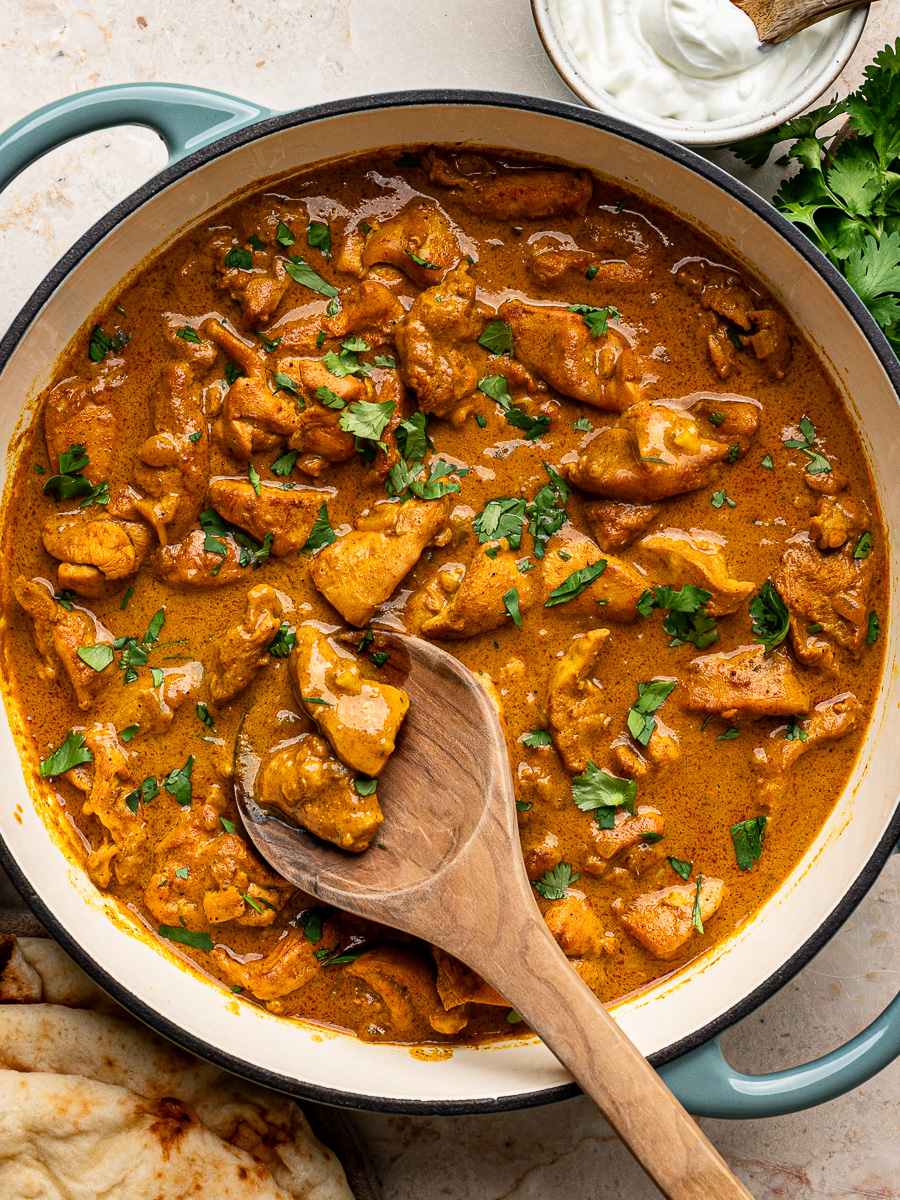
This Coconut Chicken Curry combines yellow curry powder, garam masala, and other fragrant spices for big flavor with very little effort. Simple aromatics such as onion, fresh ginger, garlic, and a touch of chili, create a cozy, fragrant sauce that tastes like it simmered for hours. While not a traditional Indian curry, the mix of spices gives you those bold, comforting flavors in a fraction of the time. Serve this luxurious chicken curry over fluffy rice with warm naan on the side, and you’ll see why it’s the dish I make on repeat.

A Really (Really!) Fast Curry That Doesn’t Compromise On Flavor
Every time I make this chicken curry, I’m so glad I did. And considering it’s the curry I’ve been cooking on repeat for years, it almost feels wrong that I’m only now sharing it with you. Made with simple pantry ingredients, it tastes restaurant-worthy yet comes together in about 30 minutes.
I’m not being dramatic when I say I despise a bland curry so believe me when I tell you this coconut chicken curry is bursting with flavor. If you’ve loved my popular Chicken Sweet Potato Curry, this one will feel familiar: it uses the same flavorful base, but it’s even quicker and simpler. I skip the sweet potato (and a few extras) to keep things fast without sacrificing taste.
The result is a rich, deeply flavored chicken curry that tastes like it simmered all afternoon but fits perfectly into a busy weeknight. Best of all, it reheats beautifully making it both a meal prep, and freezer-friendly meal.
Key Ingredient Notes
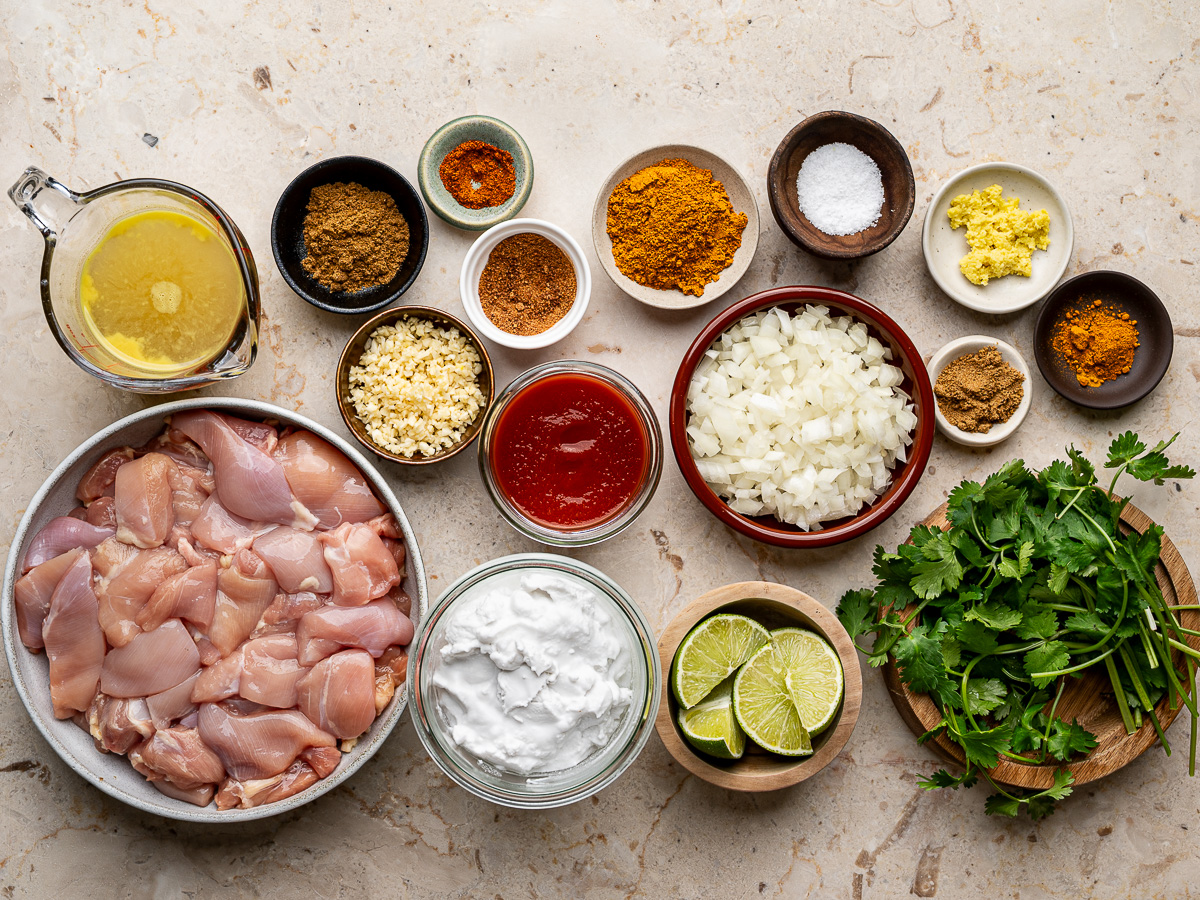
Curry Powder
While authentic Indian cuisine does not use or recognize generic “curry powders” this is what we are using here. Curry powder is a blend of warm spices like turmeric, cumin, and coriander. It gives this curry its beautiful golden color and that familiar “classic curry” flavor. I use it as the base because it instantly builds savory depth in my curries without needing a long simmer which is perfect for busy weeknights.
That said, not all curry powders are created equal. Some can be very mild while others are more pungent and/or spicy. It may take a bit of expermintenig to find one you like but perhaps more importantly, use one that is pretty fresh and hasn’t been in your pantry more than one year.
Garam Masala
Garam masala may sound similar, but it plays a totally different role. It’s more aromatic than earthy, usually made with spices such as cardamom, cloves, cinnamon, and black pepper. I like to add it toward the end of cooking so it lifts the sauce and gives the curry those gorgeous fragrant notes that make it taste restaurant-worthy.
Why we use both
Using curry powder and garam masala is what makes this curry taste layered instead of flat. Think of curry powder as the foundation, and garam masala as the finishing touch. Together, they create a sauce that tastes like it simmered for hours but without the wait.
Chicken Thighs (or breast, if you prefer)
I use boneless, skinless chicken thighs because they stay juicy and tender, even if they cook a few minutes longer. They also add a little richness to the sauce that I absolutely love.
If you prefer chicken breast, you can certainly use it. Just cut it into bite-size pieces and cook it for a few minutes less. And if the sauce needs another minute to thicken, lift the chicken out and stir it back in at the end. That simple trick keeps it perfectly tender.
For full list of ingredients and measurements, see the recipe card at the bottom of this post.
Variations And Substitutions
Make it vegan. This is a great recipe to make vegan. Simply omit the chicken and you’ll have a fabulous vegan meal. If you wish to add a protein, add a can of rinsed and drained chickpeas. Alternatively, add some cubed, baked crispy tofu.
Coconut milk allergy? Use homemade or store-bought cashew cream. To make your own cashew cream: place 1 cup raw cashews in heat proof bowl, cover with hot water by 1-2 inches. Soak for 20 minutes. Drain and add to a high-speed blender with 1 cup fresh water. Blend until completely smooth, about 1 minute.
Add more veggies. Sauté red bell peppers with the onions, or stir in chopped green beans. You can also add fresh or frozen green peas towards the end of cooking.
How To Make Coconut Chicken Curry
For full detailed instructions, see the recipe card at the bottom of this post.
- Sauté the onion, garlic and ginger.
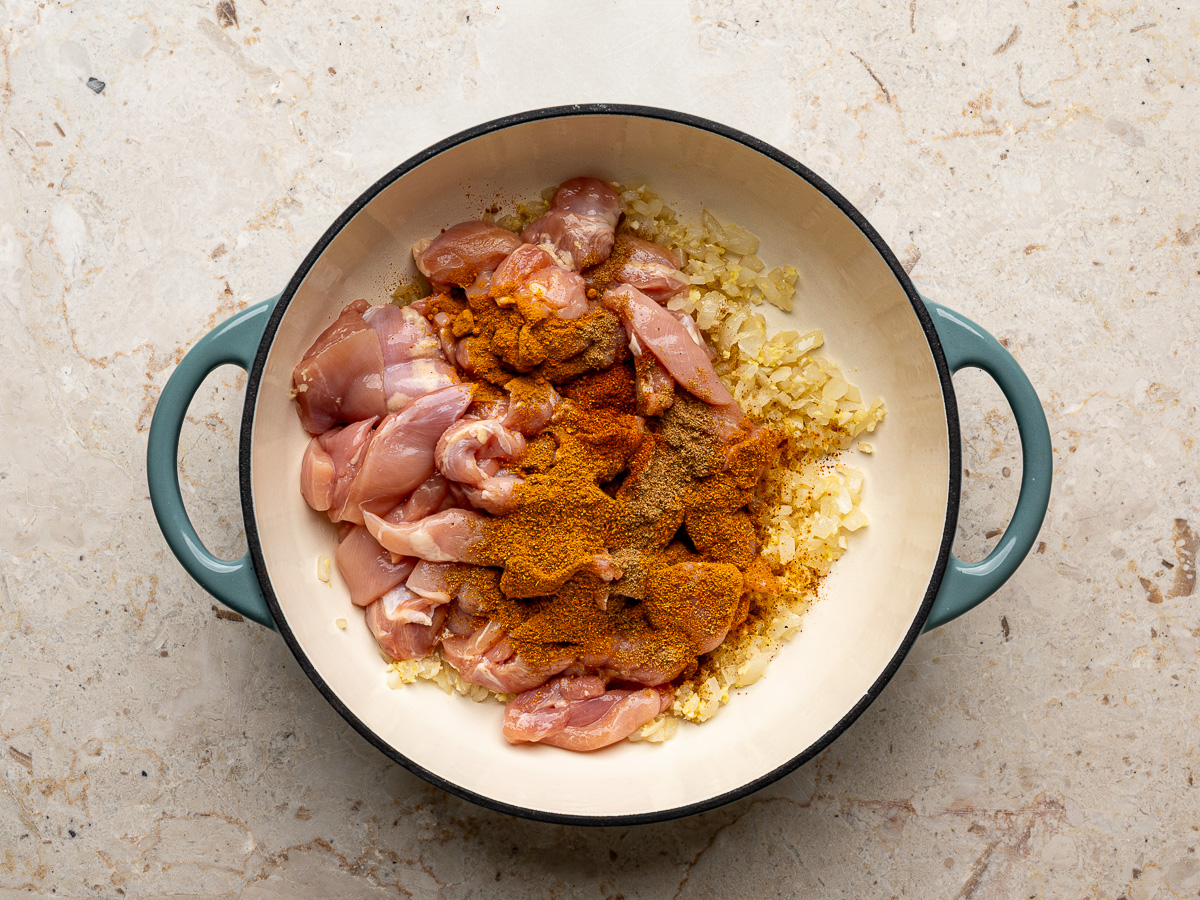
- Then, add chicken, sugar and spices and cook, tossing often, until chicken is barely pink.
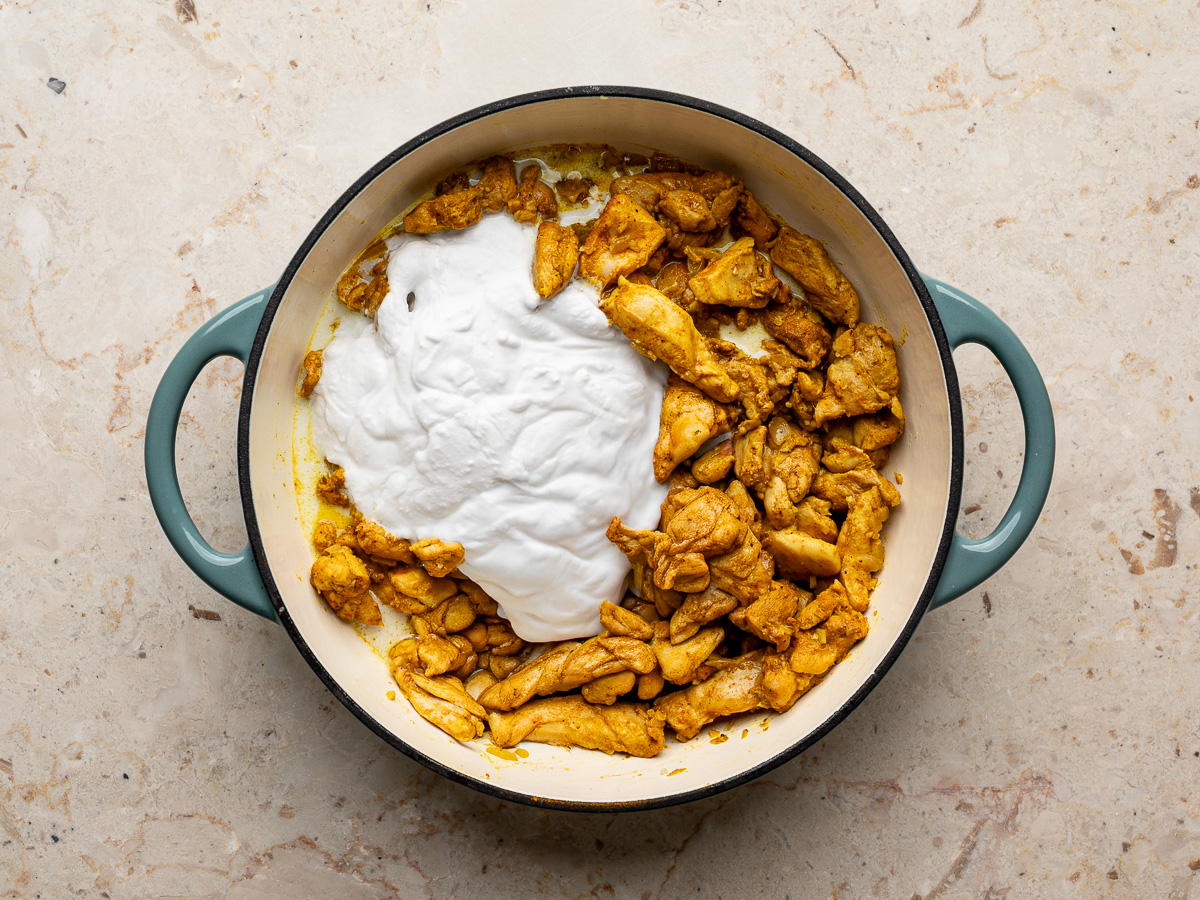
- Pour in tomatoes, broth and coconut milk.
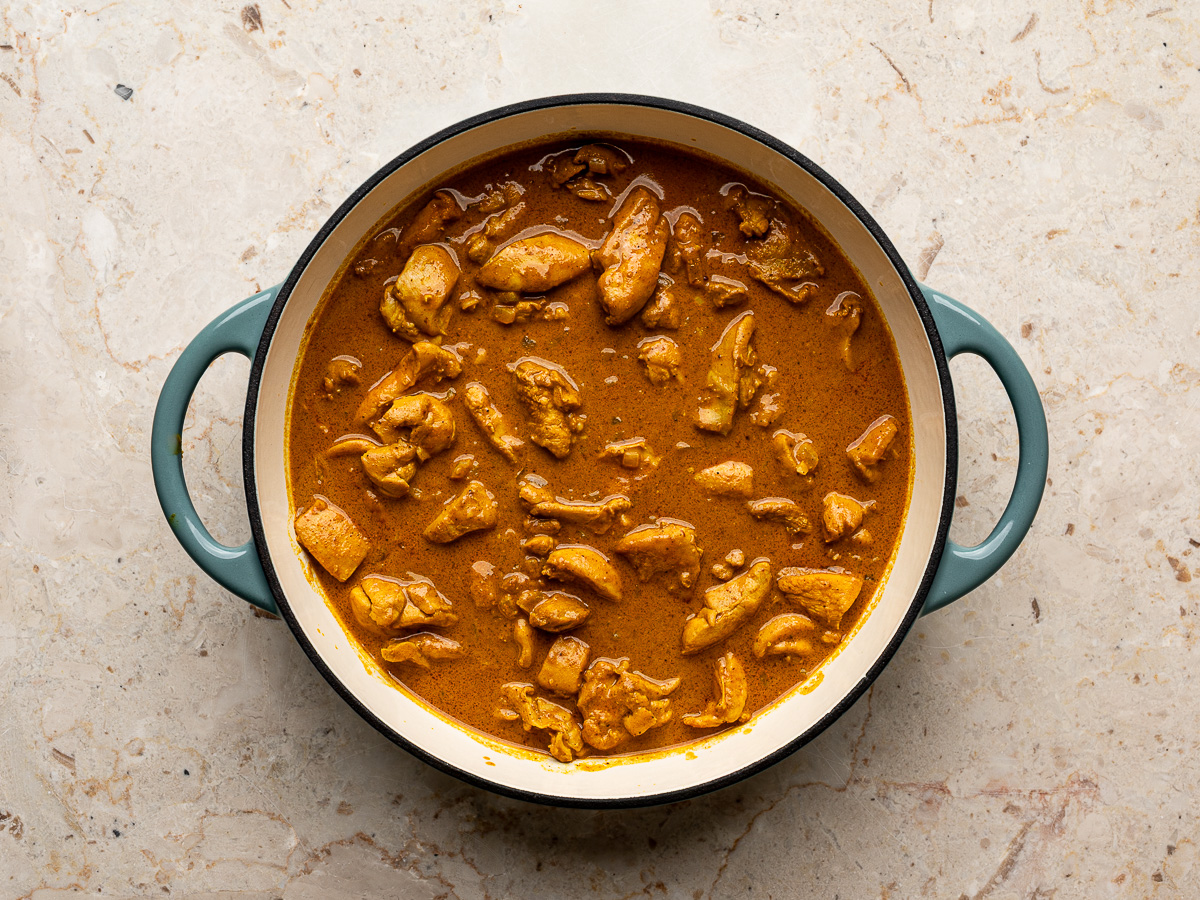
- Simmer for about 10 minutes.
- Stir in garam masala and simmer for another 5 minutes or until sauce is thickened and chicken is cooked through.
- Top with chopped cilantro and drizzle with lime juice. Serve over rice and enjoy!
Helpful Tips
- Use fresh spices for the best flavor. This curry gets most of its complexity from ground spices, which can lose their aroma surprisingly fast. After six months or so, they start to taste flat. Garam masala especially is worth buying fresh so your sauce gets that beautiful, fragrant lift.
- Use full-fat coconut milk. Full-fat coconut milk creates a rich, creamy sauce that clings to the chicken. Light versions often end up thin and watery, so splurge a little here — it’s worth it.
- Prep everything first. This curry cooks quickly, so measure your spices, chop your ginger, and cut your chicken before you start. Having everything ready makes the 10-minute prep feel effortless.
- Layer flavors. Brown your aromatics (onion, garlic, ginger) first, then add spices, then protein, then liquids. This builds a depth of flavor in a short amount of time and will make the difference between “good” and “restaurant-level” curry.
- If serving children, start with less curry powder. Some curry powders can be very spicy. If you’re using a brand you’re unfamiliar with, start with less and add more later, if desired.
- Let it rest. If you have a few minutes after cooking, cover the curry and let it sit off the heat for 5–10 minutes. Flavors continue to meld, making it even richer and more aromatic.
Serving Suggestions
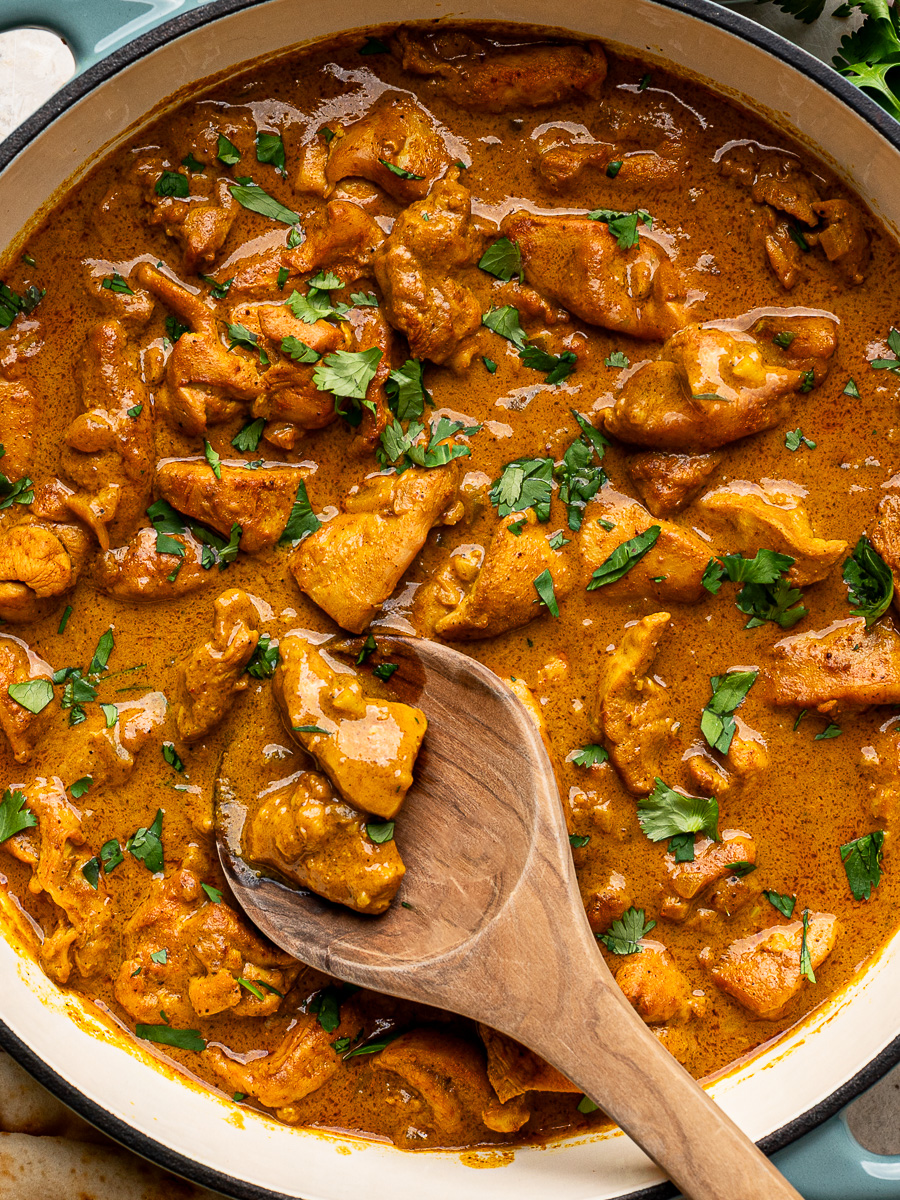
I love serving the chicken curry over white Jasmine or Basmati rice but I also regularly make my Turemric Rice Pilaf to serve with this dish, since it’s super quick to prepare — ready in just 30 minutes. For me, it’s also not possible to serve this chicken curry without flatbread for scooping, like my Homemade Naan.
For a low-carb side, try it with cauliflower rice, or steamed broccoli.
Lastly, think toppings: A dollop of yogurt and/or a spoonful of mango chutney elevates the dish and helps cool down the spice level. Even fresh cilantro and a squirt of lime at the very end makes a big difference in flavor and presentation.
Storing And Reheating Tips
- To store in fridge: Cool completely, store in an airtight container for 3–4 days.
- To reheat: Reheat gently in a skillet over medium heat. Tip: Coconut milk can separate after chilling or freezing so stir often while warming and taste to adjust seasoning if needed.
- Freezer: Portion into freezer-safe containers (leave room for expansion) and freeze for up to 3 months. Thaw overnight in the fridge before reheating.
Let Me Know Your Thoughts
If you gave this Coconut Chicken Curry a try, I would love to hear how it worked out for you. Share your thoughts in the comment section below or feel free to ask me anything — I always enjoy chatting with you.
Don’t forget to leave a star rating, too!~Sandra x
Coconut Chicken Curry (Quick & Easy)
Ingredients
- 2 tablespoons neutral oil such as avocado oil (or ghee or extra-virgin olive oil)
- 1 medium yellow onion, diced
- 3 garlic cloves, minced
- 1 tablespoon finely grated fresh ginger
- 1 1/2 – 2 pounds boneless, skinless chicken thighs, cut into 1-inch pieces
- 1 teaspoon turmeric
- 1 teaspoon cumin
- 2 -3 tablespoons curry powder (see notes)
- 1 teaspoon kosher salt, or more to taste
- 2 teaspoons coconut sugar or 1 teaspoon white sugar
- 1/2 cup tomato sauce (or crushed tomatoes)
- 1/2 cup low-sodium chicken broth
- 1 13.5-ounce can full-fat coconut milk
- 2 teaspoons garam masala
- 1 lime, cut into wedges, for serving
- ¼ cup roughly chopped fresh cilantro
- cooked rice and/or naan, for serving
Instructions
- In a large, deep, heavy-bottomed pan, heat the oil over medium heat. Add the onion and sauté for 3-4 minutes. Stir in the garlic and ginger and cook until fragrant, about 1 minute more.
- Add the chicken pieces to the pan along with the turmeric, cumin, curry powder, salt and sugar. Cook for 2-3 minutes, stirring often, until spices are toasted and chicken is lightly browned on all sides. (The chicken will not be fully cooked.)
- Pour in the coconut milk and bring the mixture to a simmer. Cook uncovered, stirring occasionally, until coconut milk has thickened, about 2-3 minutes. Add the tomato sauce and chicken broth and continue to simmer until the chicken is fully cooked and the sauce has thickened to a rich consistency, about 10 minutes.
- Top with fresh cilantro and serve the curry over fluffy rice with naan on the side, if desired.
Notes
- Curry powder: Some curry powders are a lot weaker in flavor than others, particularly if they are a little past their prime. If yours is on the weak side, add 3 tablespoons to your curry.
- Prep everything first. This curry cooks quickly, so measure your spices, chop your ginger, and cut your chicken before you start. Having everything ready makes the 10-minute prep feel effortless.
- Use fresh spices for the best flavor. This curry gets most of its complexity from ground spices, which can lose their aroma surprisingly fast. After six months or so, they start to taste flat. Garam masala especially is worth buying fresh so your sauce gets that beautiful, fragrant lift.
- Let it rest. If you have a few minutes after cooking, cover the curry and let it sit off the heat for 5–10 minutes. Flavors will continue to meld, making it even richer and more aromatic.


Join the Conversation